
1920 Assignment Post Production

Post-Production Post-production for my 1920 group project was a time to reflect on the work which I had carried out and evaluate how the last few steps I had taken in completing my work went, my overall time during the project and what I had learnt. The final steps I needed to complete for my unreal project was to apply the textures to each object I had made and positioned within Maya and to communicate with my group in order to make sure we altogether had a similar set up within our scenes.
In reference to the setting up of my museum scene, in the beginning stages of our project I was given some photos from the curator and I had used this as the base reference for my work, as the museum scene was going to be accurate to the real space and allow for the other scenes to adopt a more artistic and free approach in design.

(Ulster Museum-1920 Exhibition)
These are some photos which I decided upon using and I had basically created the reference step to step with the display boxes to the left, an array of dresses, accessories and informative material within the glass portion of the museum and had created an open space, to make it easier when it was time for filming.

(Ulster Museum-1920 Exhibition)
After I had created the layout in my scene in unreal, I didn’t mind the set-up of the real exhibition and though it provided a great space to record my scene, as there was enough space between the objects to take them in and also the corners and long hallways created suspense when creating tension and having the first person view walking down the hall. I could have maybe changed in around to fit a different look for personal to my work, but still referenced off the original.
Ana had created the top hat for the display boxes, and I had created the pair of shoes, which were worn by many women in the 1920s. Although a top hat was more of as man’s accessory and was a very grand one at that, the 1920 was the year of the woman’s and with this came woman breaching the stereotypes of the time and taking ownership in their rights and fashion. The 1920’s led to more woman wearing waist coasts, trousers and even tops hats for their evening attire.
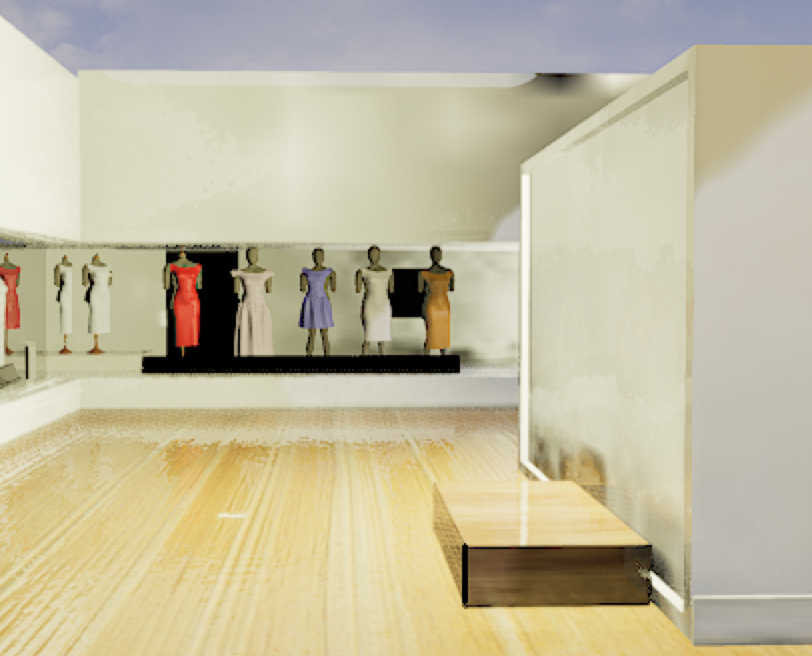
(Unreal Engine 1920 Museum- Marie)

(Unreal Engine 1920 Museum- Marie)
A final look with all the components of my scene set up and the light built with unreal and ready for filming. Top right shows all the dresses and mannequins bright enough to make the museum appear during daylight hours and presenting everything on show, below is a more spotlight approach an just the items I wanted to highlight for viewing and not every item in the exhibition.

(Maya 3D Model- Marie)
The 3D models I had made in Maya were fairly simple and were completed in both Substance Painter and Unreal, were I added textures such as glass for the podiums top and wood for the stand of the mannequin. These were able to be duplicated and used to fill up the exhibition space and were simple enough the make with the help of the museum refence photos.

(Maya 3D Model- Marie)
A more classic approach to woman’s fashion was the type of shoes they had wore and how their kitten heeled, buckled shape was both sophisticated and empowering for them. I modelled this buckled shoe in Maya, and it was fairly easy to make, as once I had gotten the base of the shoes shape, I was able to then mostly use manipulating vertices into the heel and the pointed the front of the shoe. I decided to create the straps and buckles of the shoe separate from the main model, as I thought it would be easier to model, duplicate and then attach after I had completed. The benefit and also another reason to why I had separated the buckles and the main base of the shoe. Is that with this model I could have duplicated the base and with slight manipulation of the vertices, I could have changed the colour, style and components like the size of the heel and what extras I added to make different shoes. I had planned to do this, and it is still an available option as we have been given more time in our work.

(Vintage Dancer)
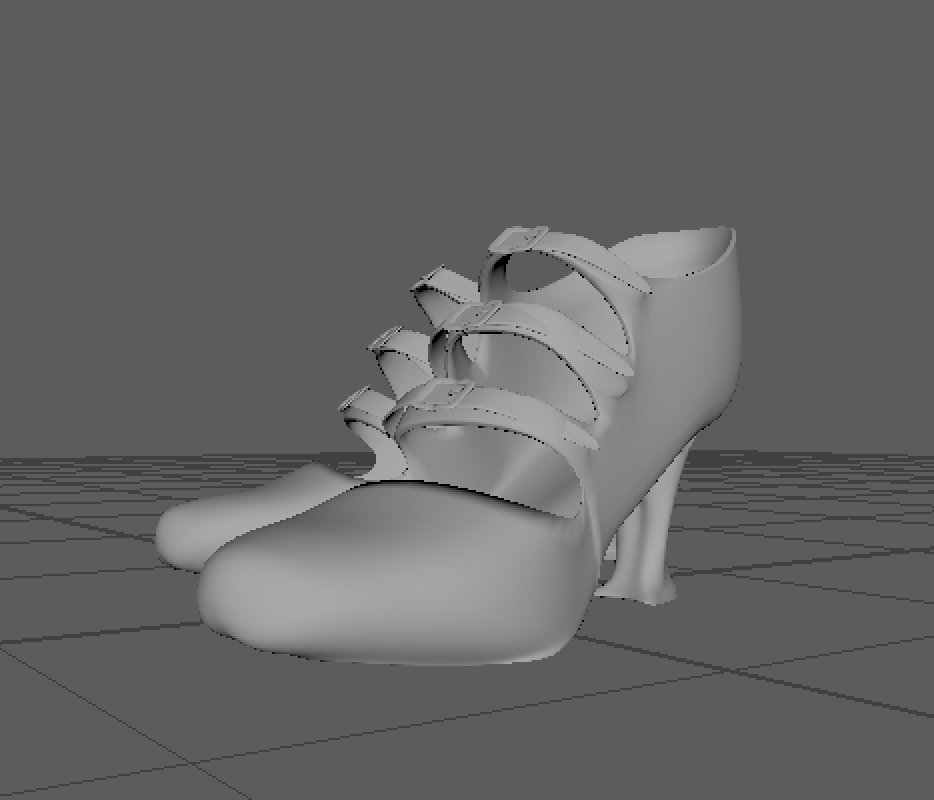
(Maya 3D Model- Marie)
A direct reference to my inspiration for the shoes, I wanted to add more to the simple, kitten heel and black leather heel, so decided to add three small buckles instead of one big buckle and I think I modelled the shoes quite close to the shoe of a woman’s foot shape and size.
In this final week of trying our best to remember our previous plan and in editing everyone’s completed scenes together. The narration and audio of the screen was given to Ana to edit and as we are tight in reaching our deadline. The added element of the narration was dropped, and we all focused on getting the filming to work in sequence with one another and provide a clear and interestingly, told story.
(Unreal Engine 1920 Museum- Marie)
(Unreal Engine 1920 Museum- Marie)
Final video of the Unreal Engine scene set up and filming after all components have been added and the lighting has been built. I added in the element of zooming in and out of interesting items and to get a better view for the audienc. The scene would have been improved with an overhead narration of the history and if the shots had more bounce to the camera, to show the security guard walking with a flashlight and moving closer to view the glass podiums and spotlighted dresses.
In conclusion when we were first introduced to this collaboration with the Ulster Museum, I was excited to develop my skills within animation and to learn more about history as I have always been interested in the subject. Working on the group project was enjoyable as everyone was eager to share their ideas and were supportive to each other and with helping complete the projects.
I enjoyed researching the different dances for my animations, the history of the 1920’s and enjoyed trying out setting up a scene again in Unreal Engine. Overall I feel like I learnt a lot about both animation and history and hope to further practice with animation and my Unreal Engine set up.
(1920 Group Project Final Video)
The groups final film where you can see all of our work combined and all the components that we have worked as separate creators, all tie together as a team. I think we created a great storyline and brought the dresses alive into their own stories, which was what David Tosh and the curator wanted to see to for their costume based exhibit.


Comments